
For me, the Olympics have always symbolized one of the highest levels of human effort — years of discipline and sacrifice distilled into a single moment where everything is decided. One run, one race, one performance becomes the measure of countless hours of preparation.
I have always felt drawn to that intensity.
I have a natural connection to the Winter Olympics as well. Perhaps it comes from my love of skiing, or a quiet wish that I might have competed someday myself. I’ve always been drawn to individual sports, where success or failure rests squarely on your own shoulders. You can only control yourself — win or lose.
Yet the Olympics are never truly individual. Even athletes who compete alone are part of something larger. They train together, support one another, and carry the pride of their country with them. If one athlete wins, the whole team celebrates. Victory or defeat must be accepted honestly and with honour, and that is something I deeply respect.
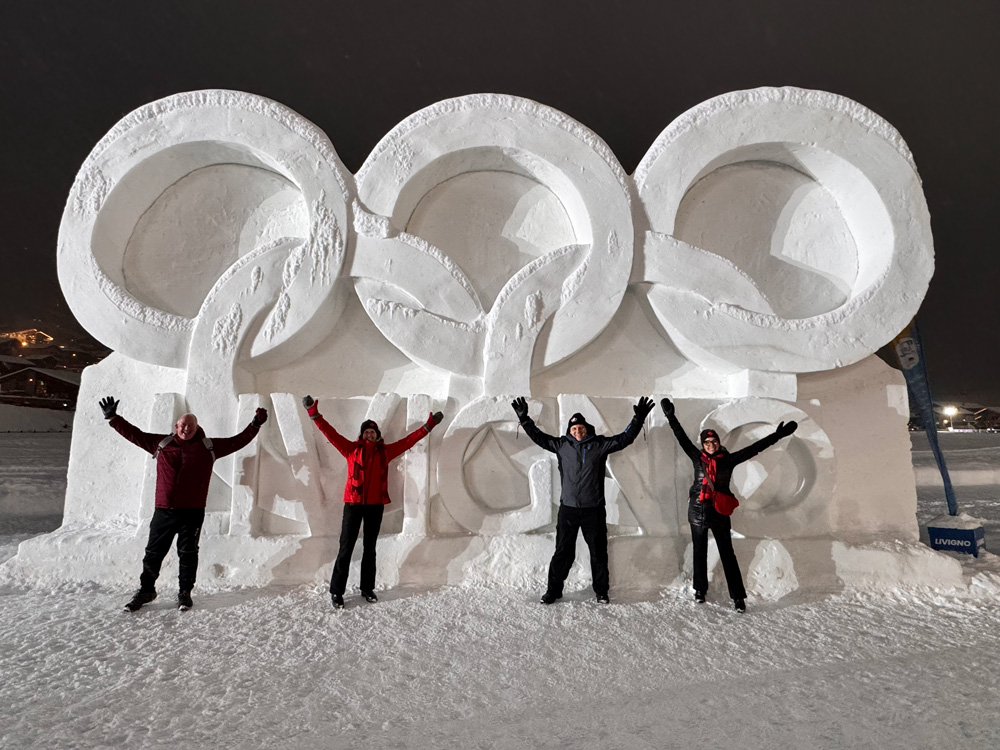
Years before the Games, when I learned the Olympics would be held in Italy, I signed up immediately for early ticket access. Italy has always had a special pull on me, and the idea of combining travel with the Olympics felt irresistible.
When the ticket window finally opened, my husband and I booked quickly and trusted we would figure out the rest later. We invited close friends to join us, and together we pieced the trip together across the mountains and cities of northern Italy.
Alongside the excitement, there was also a fair amount of nervous anticipation.
How would we navigate events spread across so many towns?
Would the accommodations be as advertised?
How do you pack for snow, cities, trains, buses, and constant movement?
And for me personally, another question lingered quietly in the background.
Would I have the energy for it all?
I tend to run on enthusiasm and curiosity, but I also know that my energy can drain quickly when there is too much stimulation — crowds, travel, noise, constant movement. I wondered if my “dig deep” button would work when I needed it most.
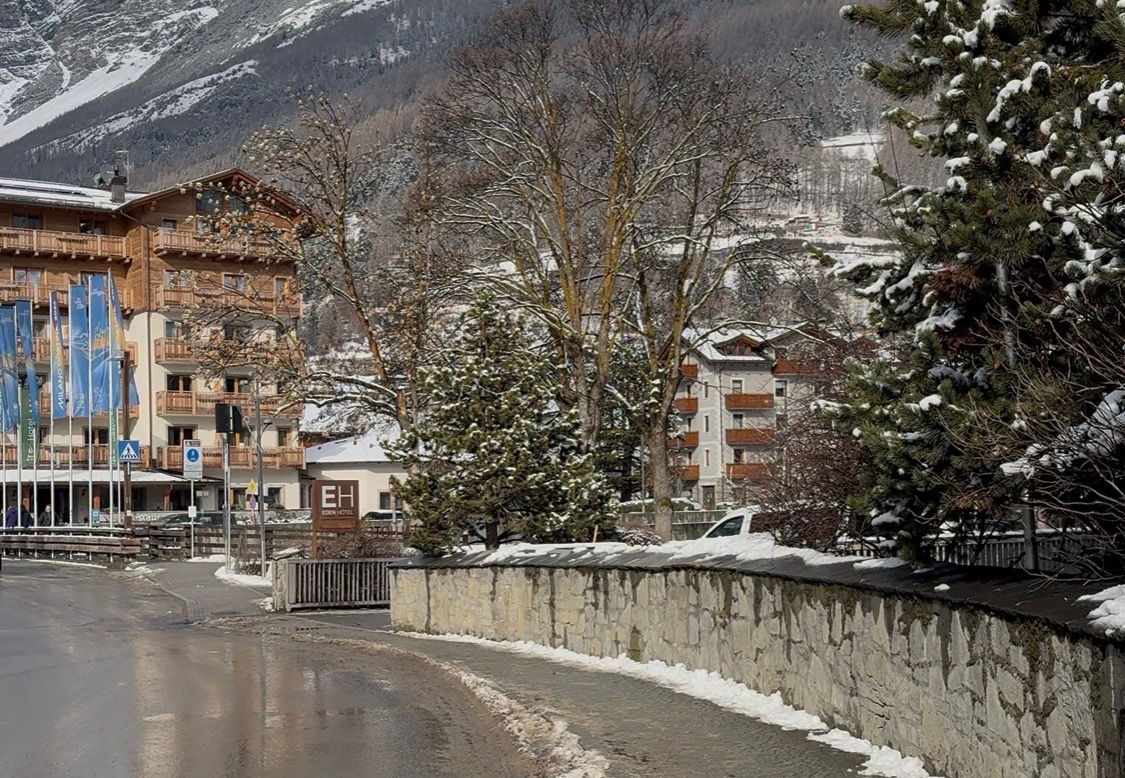
Excited for the adventure, our journey began on a train from the quaint town of Chur, Switzerland, heading toward Bormio, Italy.
Even the journey itself felt alive — passing through tunnels, over remarkable bridges, across snowy landscapes and small alpine villages. When the train stopped, we could see families heading out for winter days together, skis over shoulders and children bundled in bright colours.
It reminded me how naturally people embrace winter in this part of the world.
Watching from the frosted windows, I felt both delighted and slightly like we were intruding on their quiet family rituals. Their joy was simple and genuine. It reminded me of when my own children were young.
The train ride continued through breathtaking scenery with each turn revealing another spectacular view. We found ourselves jumping from one side of the train to the other trying not to miss anything.
I highly recommend this journey at any time of year. It must be stunning in every season.
When we arrived in Bormio, the Olympic energy was impossible to ignore.
Venues glowed against the mountains at night. Banners moved in the wind. Small groups of people gathered speaking different languages but sharing the same excitement.
There was a sense that something meaningful was happening — not just sport, but human effort at its highest level.
Watching the athletes in person was entirely different from seeing them on television. The speed, the precision, the risk — it all felt far more real.
Mogul skiers absorbed impacts that seemed physically impossible, twisting through the air and landing with precision that only comes from years of relentless discipline.
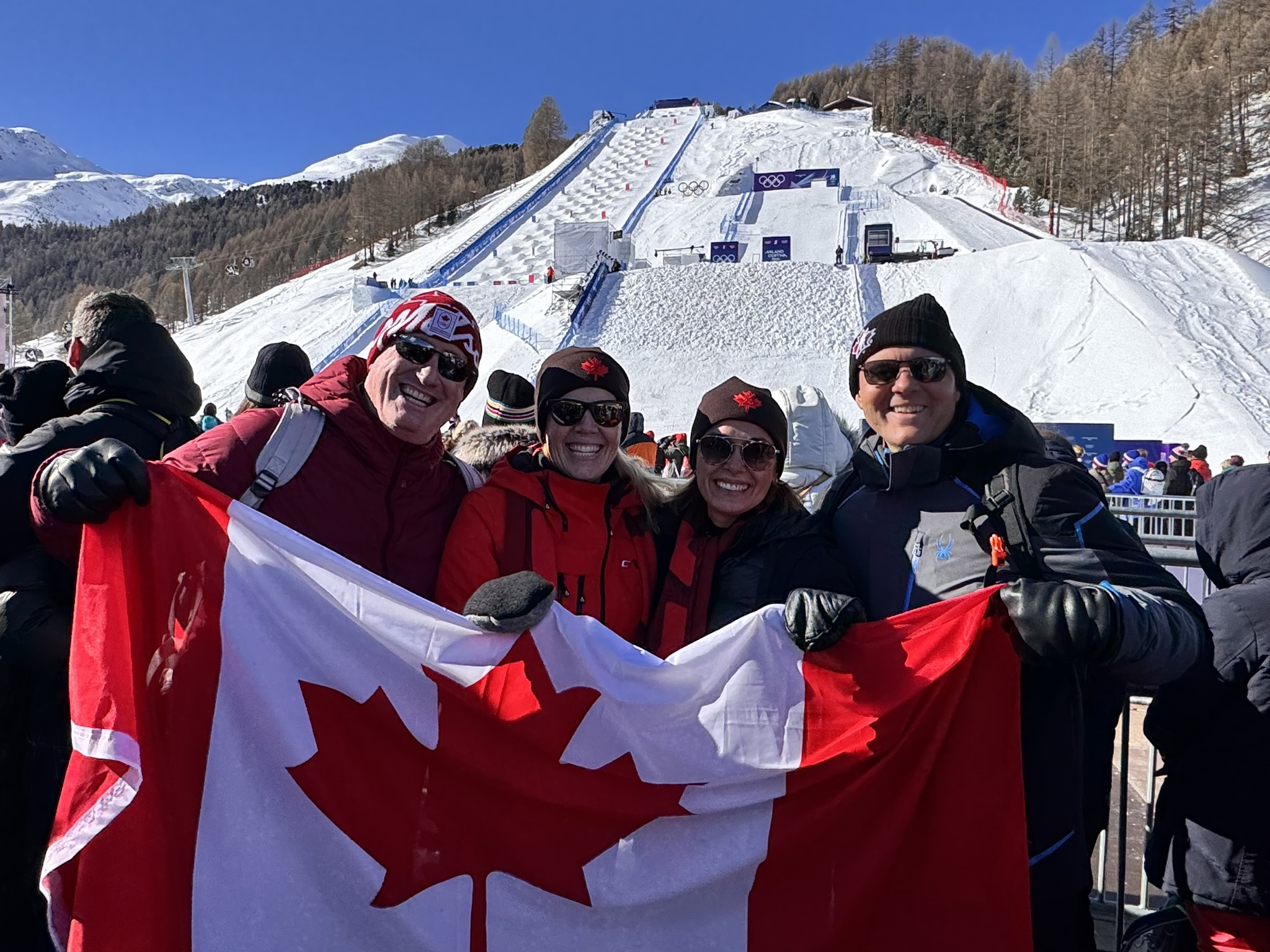
That day we witnessed Canada’s first gold medal of the Games.
The excitement spread through the crowd like a wave. Strangers congratulated one another as if we had known each other for years. We held our Canadian flag high, secretly hoping friends and family might spot us on television.
But alongside the excitement came a deeper awareness of how fragile success can be.
At another event — the men’s Giant Slalom — a favourite to win missed a gate and was suddenly out of the race. Years of preparation ended in a single moment. Watching him leave the course early, shoulders heavy, was heartbreaking.
It struck me how uncertain outcomes really are.
Athletes can do everything right and still fall short.
Hard work does not guarantee a particular result.
In that way, the Olympics are deeply humbling — even for spectators.
We all strive for success in our own lives, yet few of us perform under the weight of global expectations. Athletes carry not only their personal hopes but the pride of their country and the expectations of the world.
Watching them made me reflect on effort and outcome in my own life — how we can prepare carefully and still arrive somewhere unexpected.
The days quickly filled with logistics, movement and energy — events, crowds, tickets, travel, conversations, and constant stimulation.
There were also beautiful moments of connection — sharing tables with strangers who quickly felt like friends simply because we had come from the same country.
One evening in Livigno, during the women’s aerial finals, a sudden blizzard delayed the event for nearly two hours. Fans from all over the world huddled together in a beer tent waiting for the storm to pass.
It felt like a temporary little village of winter optimism.
While standing near a camera boom in the “Canada section,” I found myself speaking with a Canadian mother whose daughter was competing the next day. We bonded over our matching Lululemon Team Canada hats.
I asked her something that had been on my mind.
“How do you do it? I can’t imagine the emotional strength it must take to watch your child compete at this level.”
Her answer was calm and immediate.
“I’m here tonight cheering for our athletes. Tomorrow will come tomorrow.”
She had mastered the art of staying present — something I was still learning.
And yes… we did make it on TV.
Moments of exhaustion did appear.
A travel bug slowed me down early in the trip, reminding me that even extraordinary experiences still happen in ordinary human bodies that sometimes need rest.
The intensity of the Games was exhilarating — but also overwhelming.
I asked her something that had been on my mind.
“How do you do it? I can’t imagine the emotional strength it must take to watch your child compete at this level.”
Her answer was calm and immediate.
“I’m here tonight cheering for our athletes. Tomorrow will come tomorrow.”
She had mastered the art of staying present — something I was still learning.
And yes… we did make it on TV.
Moments of exhaustion did appear.
A travel bug slowed me down early in the trip, reminding me that even extraordinary experiences still happen in ordinary human bodies that sometimes need rest.
The intensity of the Games was exhilarating — but also overwhelming.
One of the most memorable journeys was the 45-minute bus ride between Bormio and Livigno. The scenery was breathtaking, but so was the skill of the bus driver navigating narrow mountain roads and endless switchbacks.
On the night of the blizzard, we even had a police escort leading us down the mountain safely. Occasionally I would open one eye just long enough to admire the long line of headlights behind us.
Mostly, I chose to rest and trust our Italian driver.
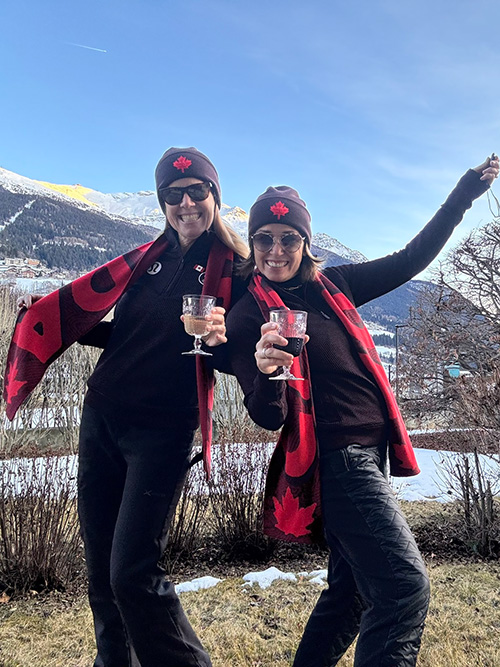
We embraced the Olympic experience fully — dancing in our winter clothes, sipping hot mulled wine as snow fell, and capturing every possible photo.
By the time we reached Milan, we were grateful for the warmer temperatures.
Our winter clothes remained packed away, though I did briefly question my wardrobe choices when observing the stylish Milanese walking the streets.
Then I quickly dismissed the thought.
No one was going to mistake where we were from with all our Canada gear.
Back in our apartment we gathered around snacks and wine to watch the men’s hockey game. I paced the room because I could barely watch.
Why does hockey stress me out so much?
I tried to channel the calm mindset of the ski mom from Livigno… but I failed miserably.
Canada won.
Perhaps we were the lucky charms.
Speed skating events followed, delivering another Canadian gold medal.
But the women’s Canada–USA hockey game brought a level of tension that was almost physical. The arena buzzed with intensity.
And somewhere during those days I realized just how much stimulation my nervous system had absorbed.
I wasn’t feeling great.
We still held tickets for another major event that would require more travel and more intensity. Quietly I began questioning whether I wanted to keep pushing forward at the same pace.
I felt caught between two emotions.
The desire for rest.
And FOMO.
When our friend Jenny — entirely on her own — suggested she might stay behind instead of attending the game, I felt immediate relief.
I realized how tired I truly was.
But I also wondered…
Why hadn’t I said it first?
Later that day, on the train to Verona, I quietly put my ticket up for resale.
It was a small decision.
But an important one.
For the first time during the trip, I chose calm over intensity.
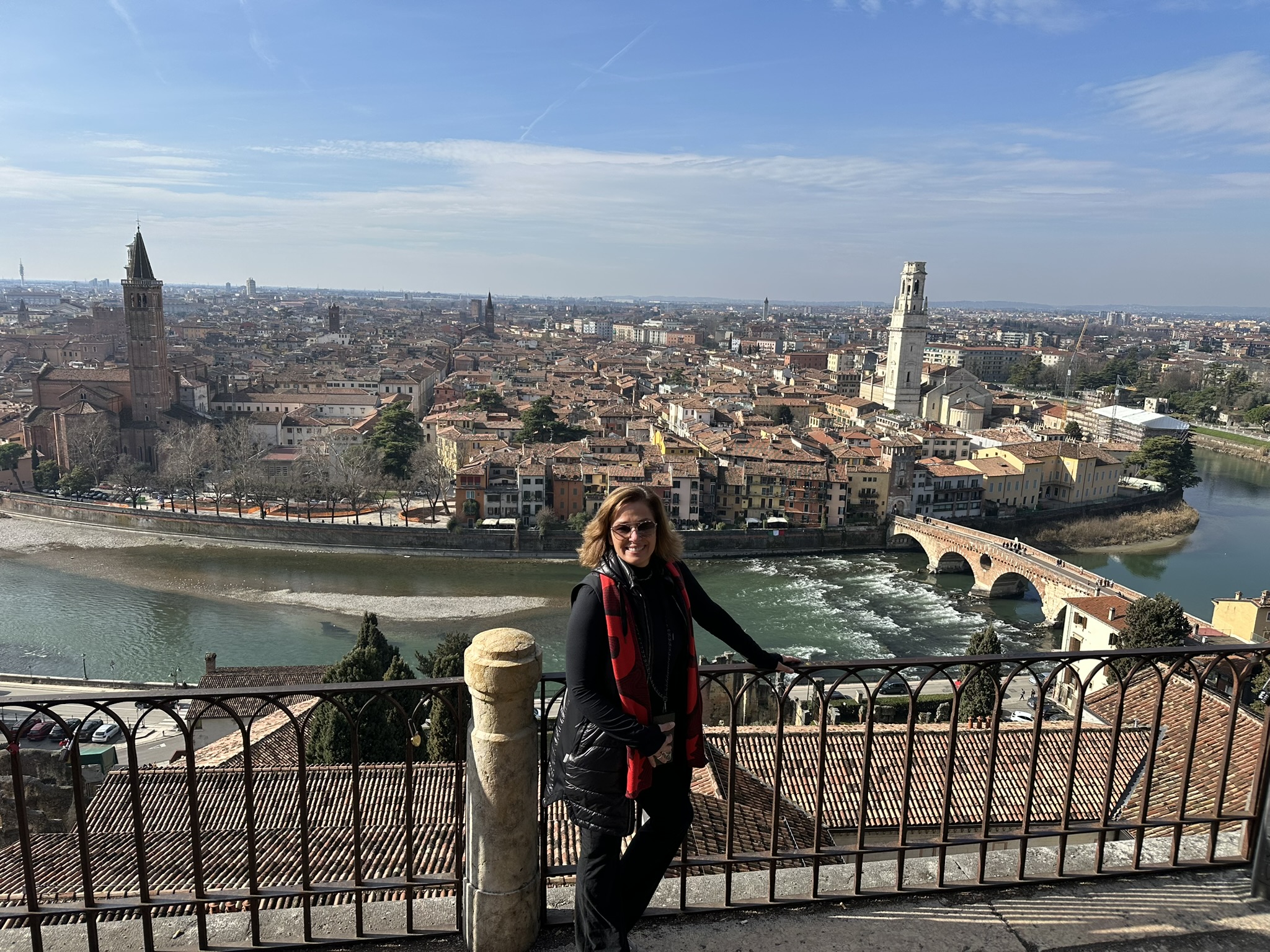
That evening we reunited with Anna, our daughter’s former exchange student, and shared a wonderful dinner with her family in Verona. It was a beautiful reminder of how relationships can stretch across years and continents.
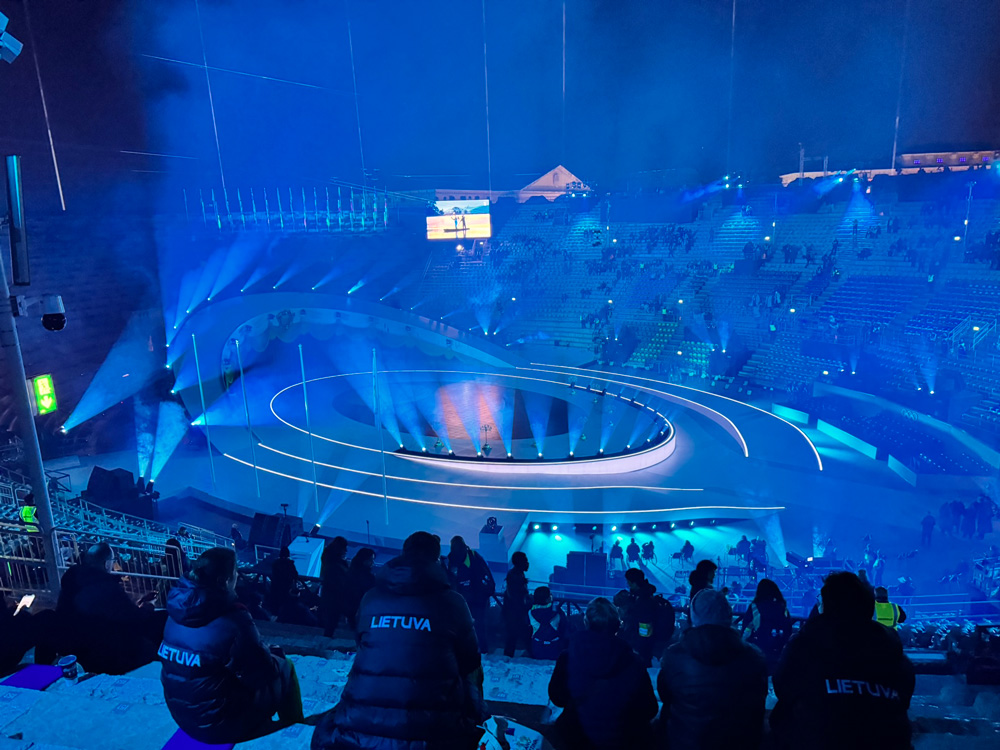
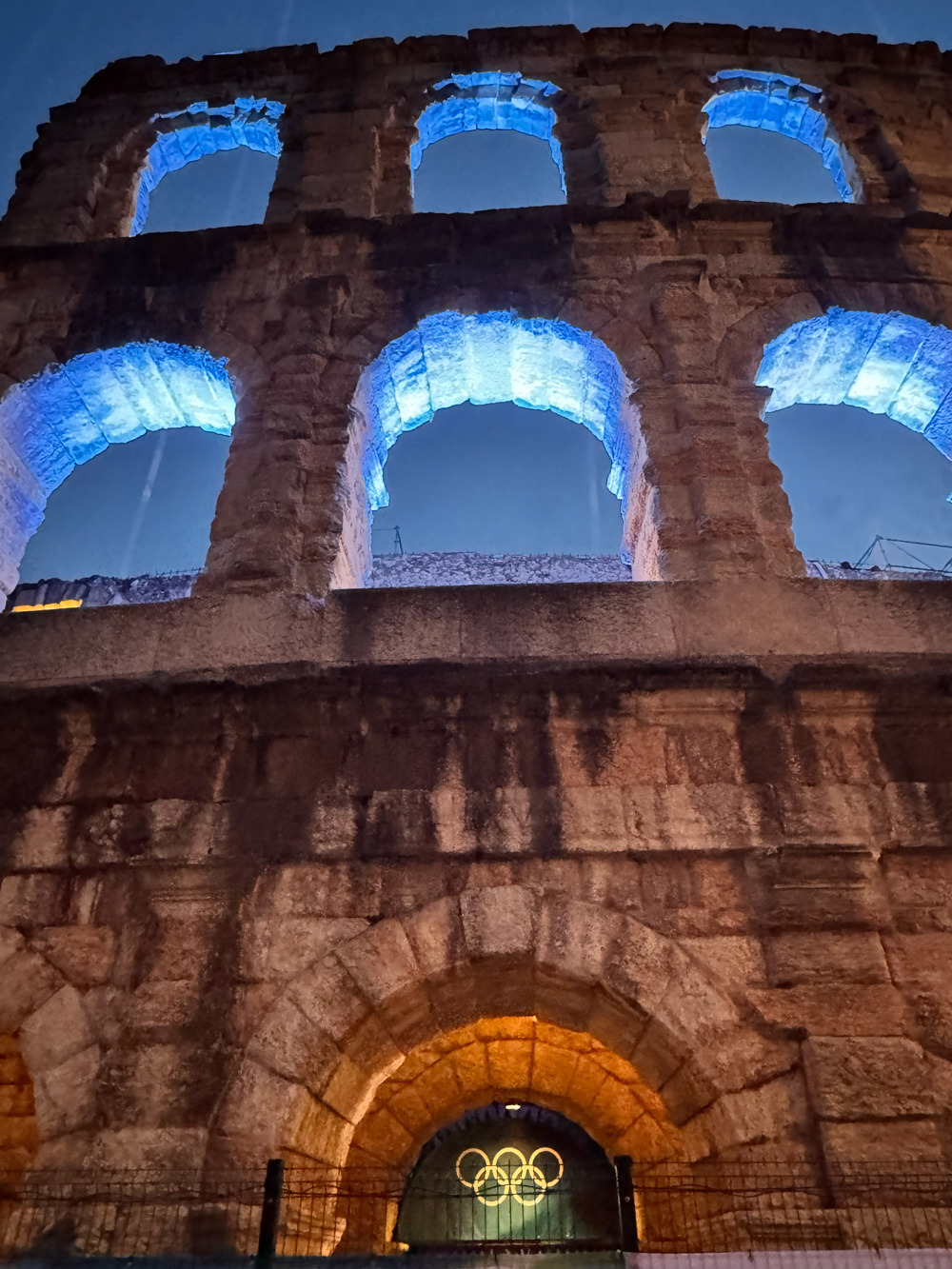
The closing ceremonies in Verona were everything I had hoped for — a powerful celebration marking the end of an extraordinary experience.
But even before the ceremonies began, I had already made another decision.
I wasn’t going home yet.
A significant part of the cost of traveling from Canada is simply getting here. I was already in Europe.
And more importantly, I needed time to slow down after the intensity of the Games.
I had always dreamed of experiencing everyday life in Europe — buying groceries, preparing simple meals, wandering historic streets, visiting galleries, and allowing time to move more slowly.
Most of all, I needed time to regulate my nervous system in the best way I know how.
Alone.
The Olympics were inspiring, humbling, and unforgettable.
But what they ultimately gave me was clarity.
After all the excitement and achievement, what I needed most was stillness.
And that realization is what led me to stay.
The morning my husband and our friends left for their early flight, I woke before their alarm sounded so I could say goodbye.
Four o’clock in the morning is a difficult hour when a full day of travel lies ahead, and I wanted to send them off well.
After they left, the house felt different.
Quieter.
I moved slowly through the rooms making sure everything was in order before packing my own things.
The laughter and movement that had filled the space only hours before had disappeared.
Eventually I fell back asleep.
When I woke later that morning, something had shifted.
The heaviness of constant travel had lifted, replaced by a quiet sense of possibility.
For the first time in days there was nowhere I needed to be and no schedule to follow.
This day belonged entirely to me.
And I knew, with a calm certainty, that staying in Italy had been the right decision.
I thought I was simply extending the trip. What I was really about to begin was something different entirely.
I’ll share that part of the journey in the coming days on my blog.
Leave A Comment
Related Posts
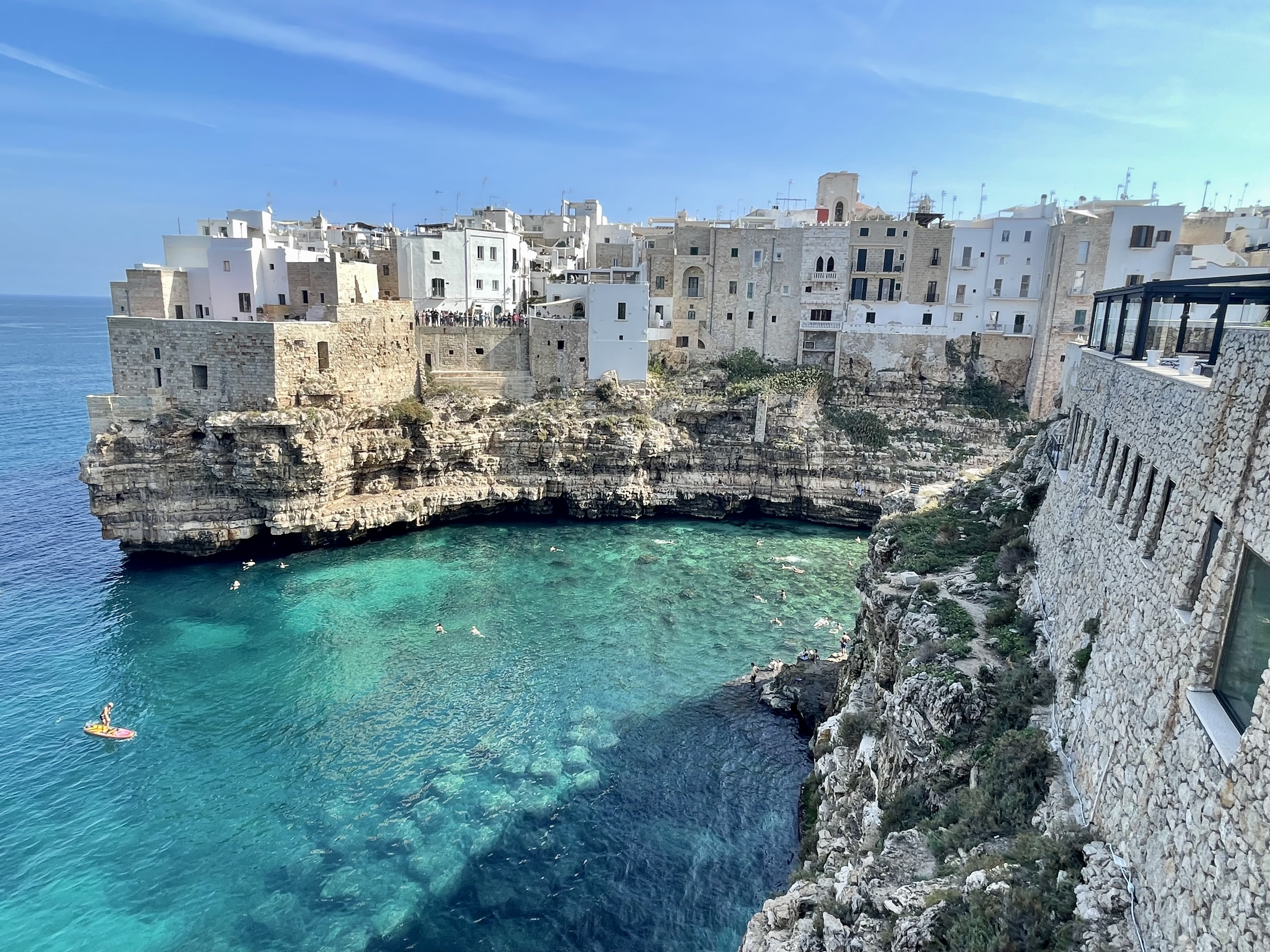
The Art of Making Room | Lessons from a Solo Cycling Trip Through Puglia
Making Our Own Magic | What a Week in Slovenia Taught Me
The Gift of the Push